

Meet Duncan Berry, an artist championing wildlife and coastal habitat on Cascade Head.
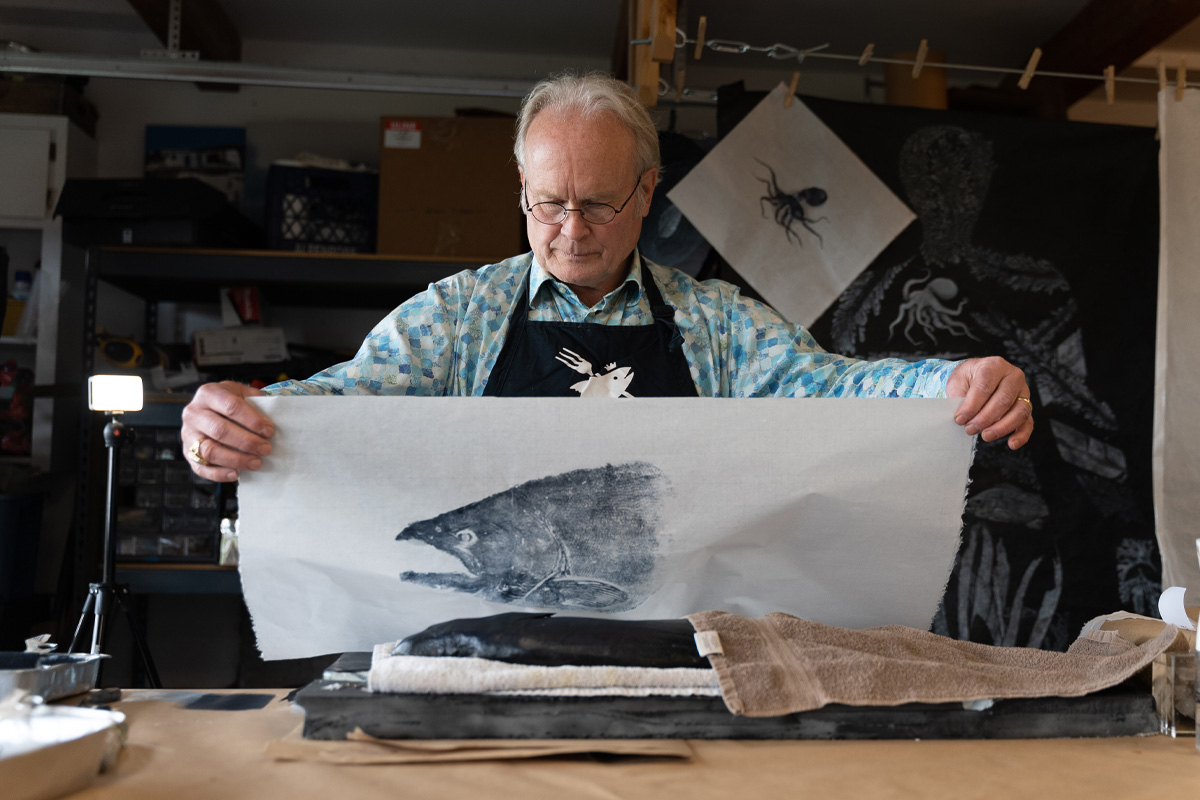
On most mornings, Duncan Berry watches Roosevelt elk quietly slip through woodlands outside his art studio in the UNESCO Biosphere Region at Cascade Head on the Central Coast. Inside, as he practices gyotaku — the centuries-old Japanese art of pressing rice paper onto inked fish — Berry occasionally pauses to look out over the Salmon River estuary, a living corridor for wildlife and several of Oregon’s iconic salmon species. It’s one of many places he finds inspiration for artwork that speaks for the ocean.
Raised in a family of artists, Berry has lived and worked along this rugged coastline since 2006. His professional journey, winding through careers in commercial fishing, product design and environmental advocacy, led him to where he is today — dedicated to an artistic practice rooted in conservation.
“What I love about art is that we don’t need to translate anything,” Berry says. “We know what it means because we can feel it.”
Making Conservation a Work of Art
This philosophy extends beyond his studio. Based on his ecological art practice, Berry founded the Westwind Stewardship Group, helping preserve more than 500 acres of wilderness at the mouth of the Salmon River. He also partners with scientists to develop education and outreach programs through the Cascade Head Biosphere Collaborative.
The landscape here blends sea caves, coastal temperate rainforest and wind-shaped headlands that shelter a remarkable diversity of plants and wildlife — and many visitors don’t even know it’s here, just 3 miles north of Lincoln City. “I want people to deeply connect to this place,” Berry says, “because you care about what you know and love.”
For Berry connection means integrating the land into his artwork. A recent exhibit, for example, featured 7-foot-high silhouettes filled with gyotaku-printed creatures found within a mile of his home. Through this, he invites viewers to see other species as relations rather than resources.
Illuminating Natural Wonders at Cascade Head
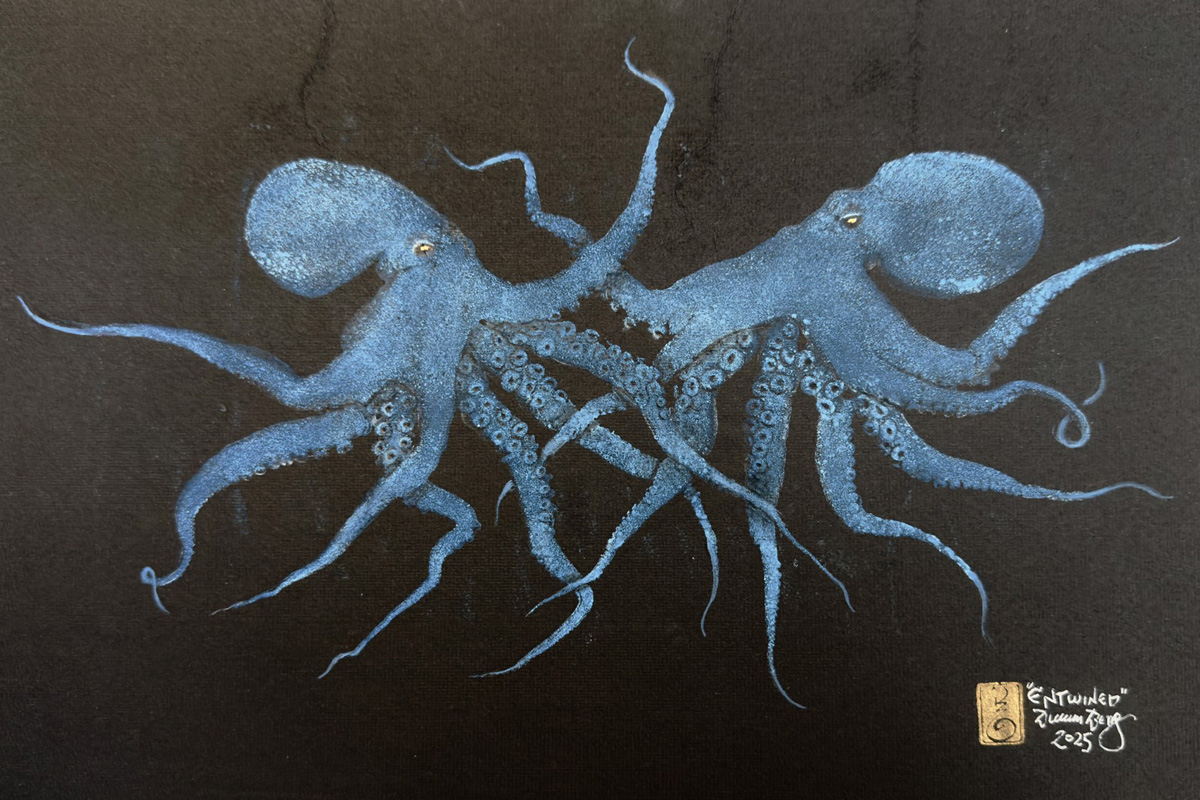
Wonder sits at the center of Berry’s work with the Cascade Head Biosphere Collaborative. His seasonal classes often begin with stories that spark awe — rockfish that live more than a century and octopuses with three hearts that are masters of camouflage. “They have an extraordinary capacity to learn and adapt quickly,” he says of the intelligent cephalopods.
Many of the educational events — run by Berry and a team of local naturalists and artists — focus on keystone species and the region’s extraordinary biodiversity. Now spanning over 100,000 acres, this unique ecosystem is home to wildlife ranging from bears and cougars to bald eagles and spotted owls. In 2026 the organization will offer a popular speaker series and workshops, introducing an estimated 5,000 visitors to the state’s only UNESCO Biosphere Reserve.
On select weekends, you can board a U.S. Coast Guard–certified pontoon boat for guided tours of the lower Salmon River, launching from Knight Park, the river’s only public boat-access point. Gliding across calm estuary waters, there’s a high probability of spying eagles and herons alongside seals and river otters.
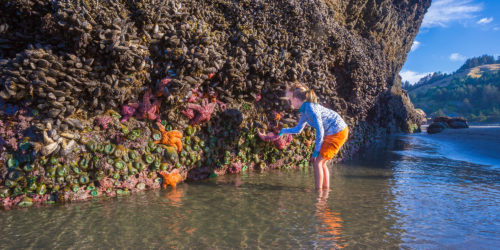
The Collaborative also partners with Explore Lincoln City on the Biosphere Beach Ambassador program, placing experts at the Northwest 15th Street beach access near tide pools on most Saturdays from May through September. Magic awaits at low tide, when mussels glisten, green anemones sway and purple sea stars cling to the rocks. Offshore, gray whales sometimes pass on their long migrations.
Another offering, one of several Explorience programs, features a free 90-minute guided walk through the Cascade Head landscape, introducing native plants, geology, conservation efforts, and the history of the Nechesne people, the area’s first inhabitants.
Sea-Inspired Exhibits and Coastal Art Galleries
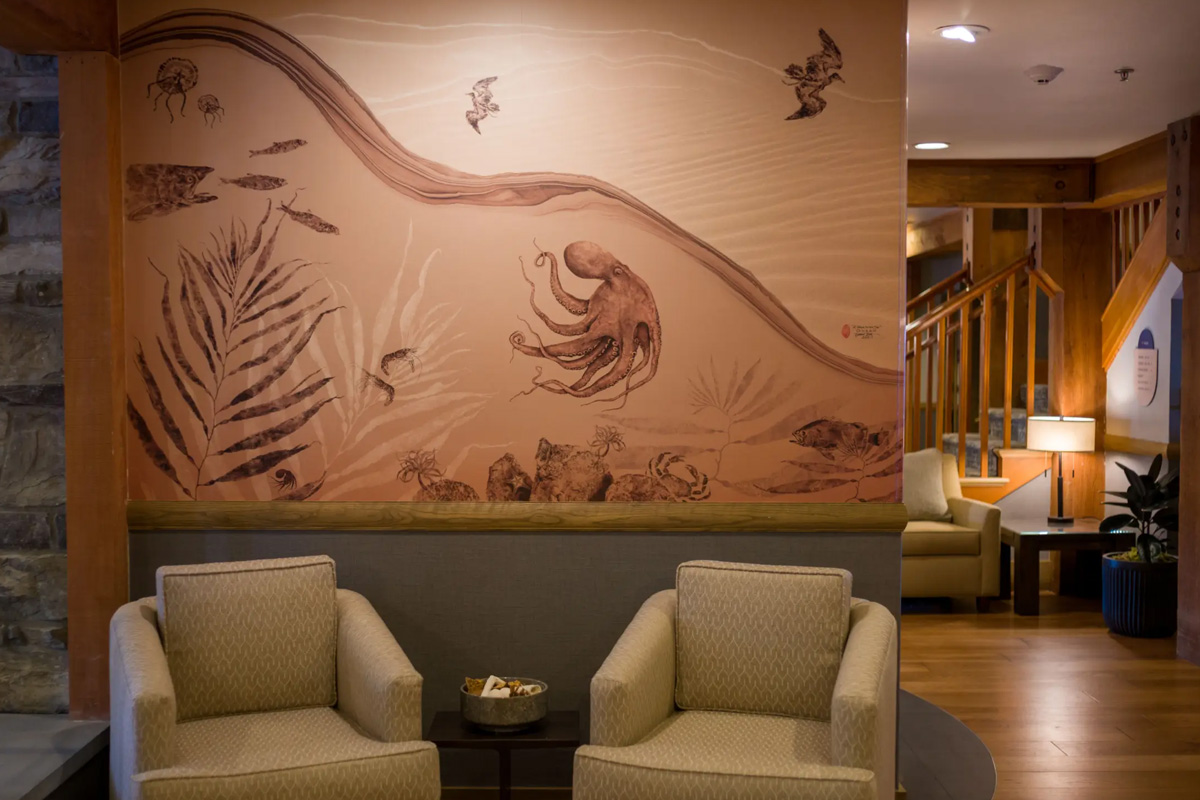
There are many places along the Coast to discover Berry’s work and share in his deep wonder for the sea. In Astoria permanent collections are on display at RiverSea Gallery and the Cannery Pier Hotel & Spa. Farther south, his gyotaku prints appear at Nehalem’s Wild Coast Goods and Cannon Beach’s Shearwater gallery, along with murals at the Stephanie Inn.
In Newport the Oregon Coast Aquarium features Berry’s permanent exhibit, “Thanks Be to the Sea,” with more than 40 gyotaku prints including a 37-pound Chinook salmon, a deep-sea viperfish and a gray whale pectoral fin. The artwork is housed within the aquarium’s “Passages of the Deep” exhibit, an immersive network of underwater walkways that showcase three distinct ocean habitats, including an open sea tunnel home to four species of sharks.
Farther south, Berry’s art even appears at one of Oregon’s most iconic coastal landmarks. Perched 206 feet above the Pacific, the Heceta Head Lighthouse near Florence is among the most photographed sites on the Coast and offers prints for sale in its gift shop. You can turn a visit into an adventurous weekend by booking a stay in the nearby assistant lightkeeper’s cottage. Built in 1893, it’s one of the last remaining on the Pacific Coast and now serves as a spectacular cliffside bed-and-breakfast.
– By Kerry Newberry