

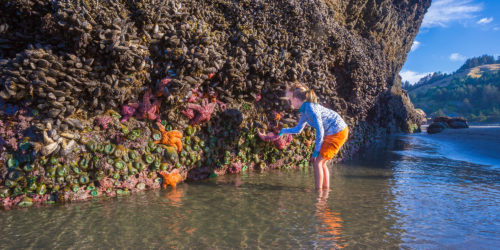

Learn how to identify and avoid disturbing these tiny shorebirds during nesting season.
Spring on the Oregon Coast brings not only warmer weather but also more wildlife — migrating gray whales, raucous colonies of common murres on cliff ledges and charismatic tufted puffins perched on sea stacks. While all wildlife should be viewed from a safe distance, one species in particular requires extra care: western snowy plovers.
These shorebirds, a threatened species, nest on sandy beaches from March 15 until September 15. During this time, some activities, like bike riding and dog walking, are prohibited on multiple beaches along the coast. Beachgoers should “Coast Like a Local,” checking not only the tides and weather, but also maps that note sensitive plover-management areas to help protect the tiny, fluffy birds.
How to Identify and Safely Watch Plovers
While shorebird identification can be daunting, western snowy plovers are relatively easy to tease out from other birds foraging along the beach, both by their appearance and behavior. The hardest part, though, is finding them in the first place, all while staying a safe distance away to avoid disturbing them.
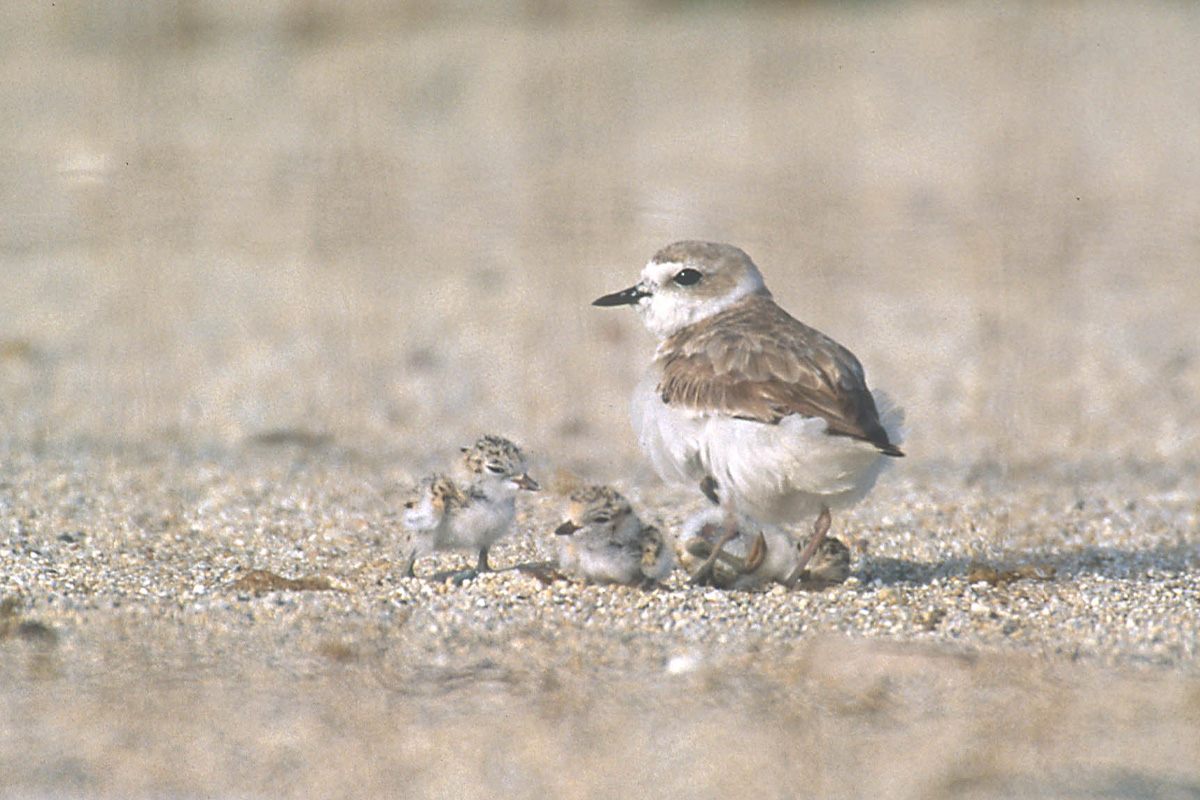
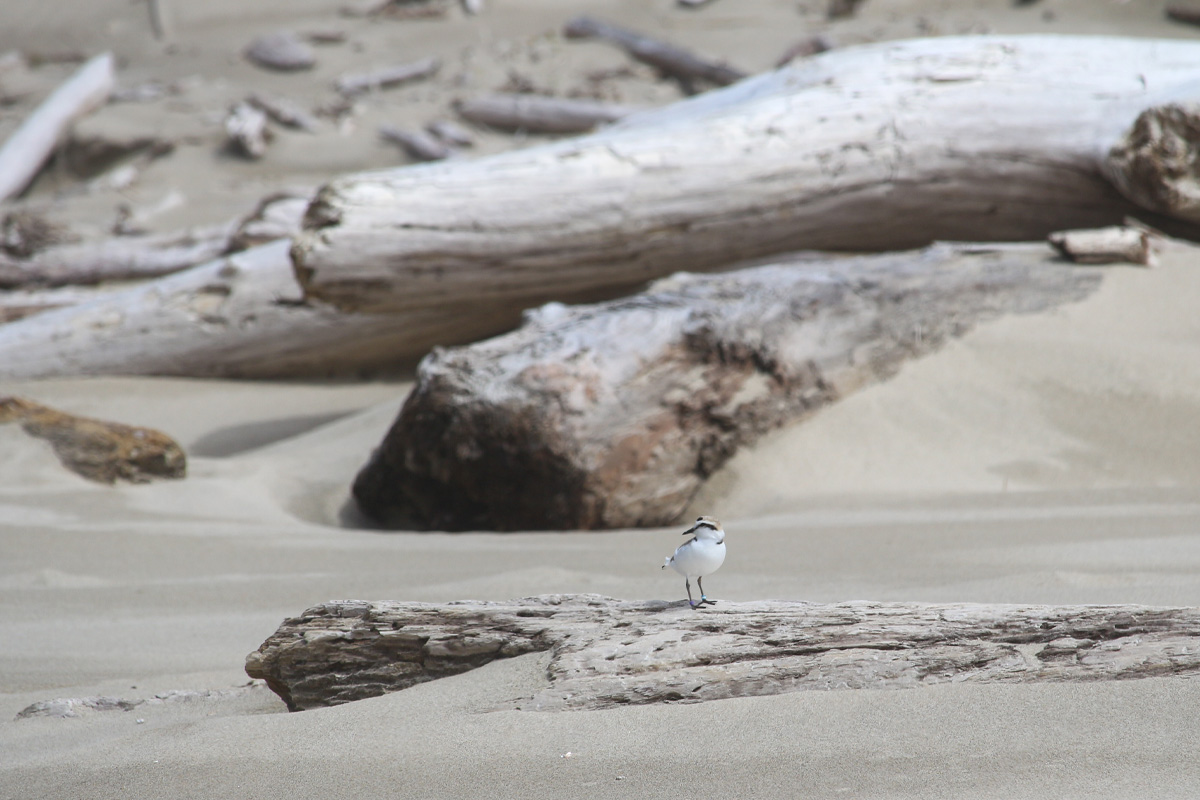
Plovers require dry sand for nesting and roosting, where drift logs, shells and other beach relics create shelter and perfect camouflage for the sparrow-size birds, who evolved to resemble their sandy home. The birds have a white belly, taupe back and wings, and relatively long, toothpick-size slate legs. Black markings frame their face — a cap above their forehead, a streak behind their eyes and a broken necklace across their chest and shoulders.
Other common shorebirds, such as sanderlings, have mottled brown and tan wings, with no black markings on their face. Sanderlings typically forage in groups on wet sand, where the waves stretch out and ripple across the beach. The birds will often scurry away from the water and suddenly fly elsewhere. In contrast, snowy plovers typically don’t fly, but rather use their minuscule legs to rapidly dart across the sand along the high-tide line, though they can also be found foraging in wet sand.
Some plover populations live year-round on the coast. Beaches with plovers are typically well-marked with signs, alerting visitors to the birds’ presence and noting beach closures and restrictions.
Why Nesting Plovers Need Protection
Snowy plovers are one of the only birds in the Pacific Northwest that build nests on open coastal sandy beaches. But such an adaptation makes survival difficult on the Oregon Coast, where European beach grass dominates. In the early 1900s, the federal government planted the golden invasive grass along the coast to stabilize the dynamic and expansive sand dunes, making way for roads and beach towns. Much of the snowy plover’s open sandy habitat — which historically stretched from Southern Washington to Southern Baja California, Mexico — has been lost.
By the 1990s, Oregon’s coastal snowy plover population dipped to an estimated 50 birds. In 1993, after they were listed under the federal Endangered Species Act, mandates for habitat protections and restoration actions between state and federal agencies followed, focusing on dune restoration along the Central and Southern Coast. The birds have since rebounded — to an estimated 500 individuals — though they remain at risk due to habitat loss, and require on-going management from disturbance. They are still listed as threatened by both the federal and state government.
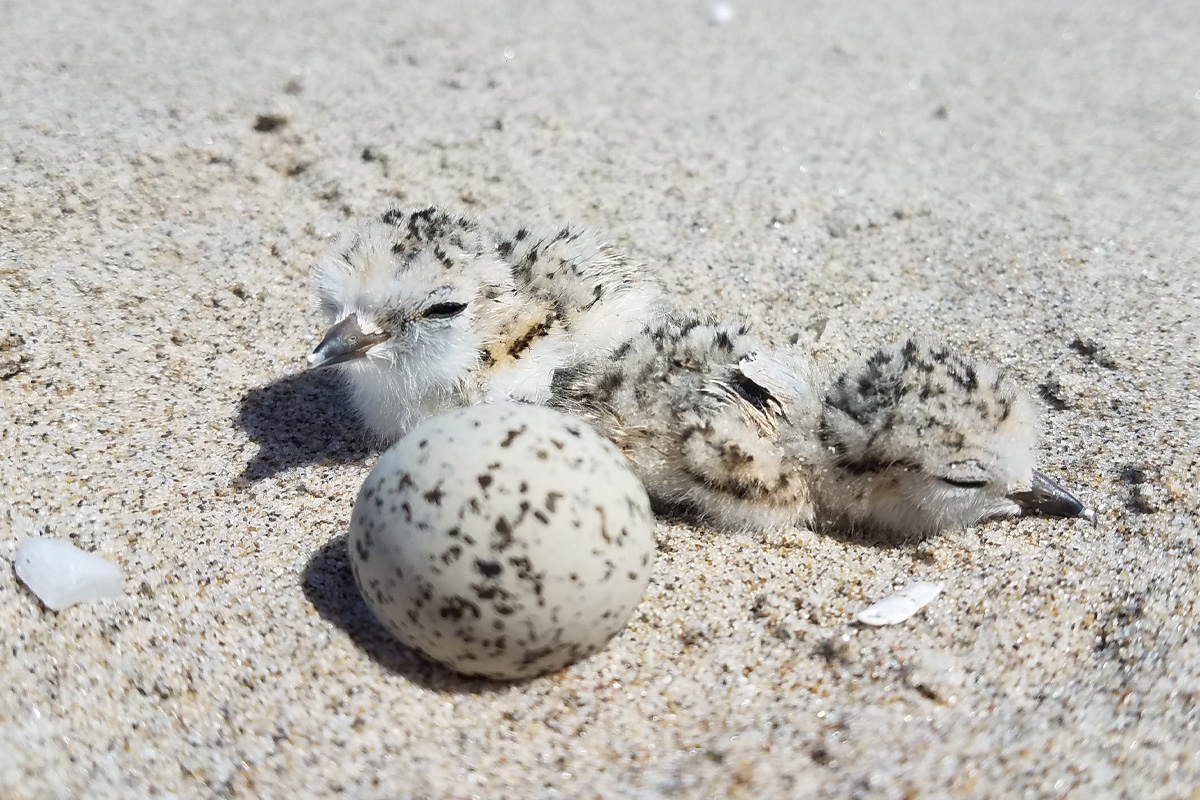
In areas where snowy plovers have found a foothold, they continue to face a host of threats that you can help lessen when you’re on the beach. They not only suffer predation from ravens and crows, but also are at risk from people and dogs walking on the beach who spook the hard-to-see birds or crush their tan-colored, speckled eggs. If they are repeatedly disturbed during the spring breeding season, plovers may abandon their nests.
Beaches like Sitka Sedge State Natural Area, about 5 miles north of Pacific City, are among those with seasonal restrictions in place. During this time, dogs (even on leashes), bikes, kites and vehicles are prohibited on a portion of the northern area of the park. Pedestrians and equestrians are required to stay on wet sand in restricted areas, or preferably avoid the areas altogether. Other beaches that have portions closed during nesting season include the Bandon State Natural Area, Oregon Dunes National Recreation Area, Bayocean Spit and Fort Stevens State Park. The Oregon Parks and Recreation Department has detailed maps for where to watch out for the birds.
Ways to Help Keep Populations Up
While snowy plover populations have increased along the Southern and Central Oregon Coast, the birds have been slower to reestablish nesting sites on the busy North Coast. To help monitor breeding birds in the area, the Bird Alliance of Oregon offers volunteer citizen science opportunities through its Snowy Plover Patrol program, from April until September.
Additionally, the Oregon Shores Conservation Coalition sells snowy plover merch like tote bags and stickers. Money from purchases helps the nonprofit continue its mission to protect the coastal environment. You can also help support awareness with snowy plover mugs and stickers, available at the Oregon Coast Visitors Association online store.
– By Josephine Woolington
– Top photo by Steve Dimock / TSOC
in Wildlife